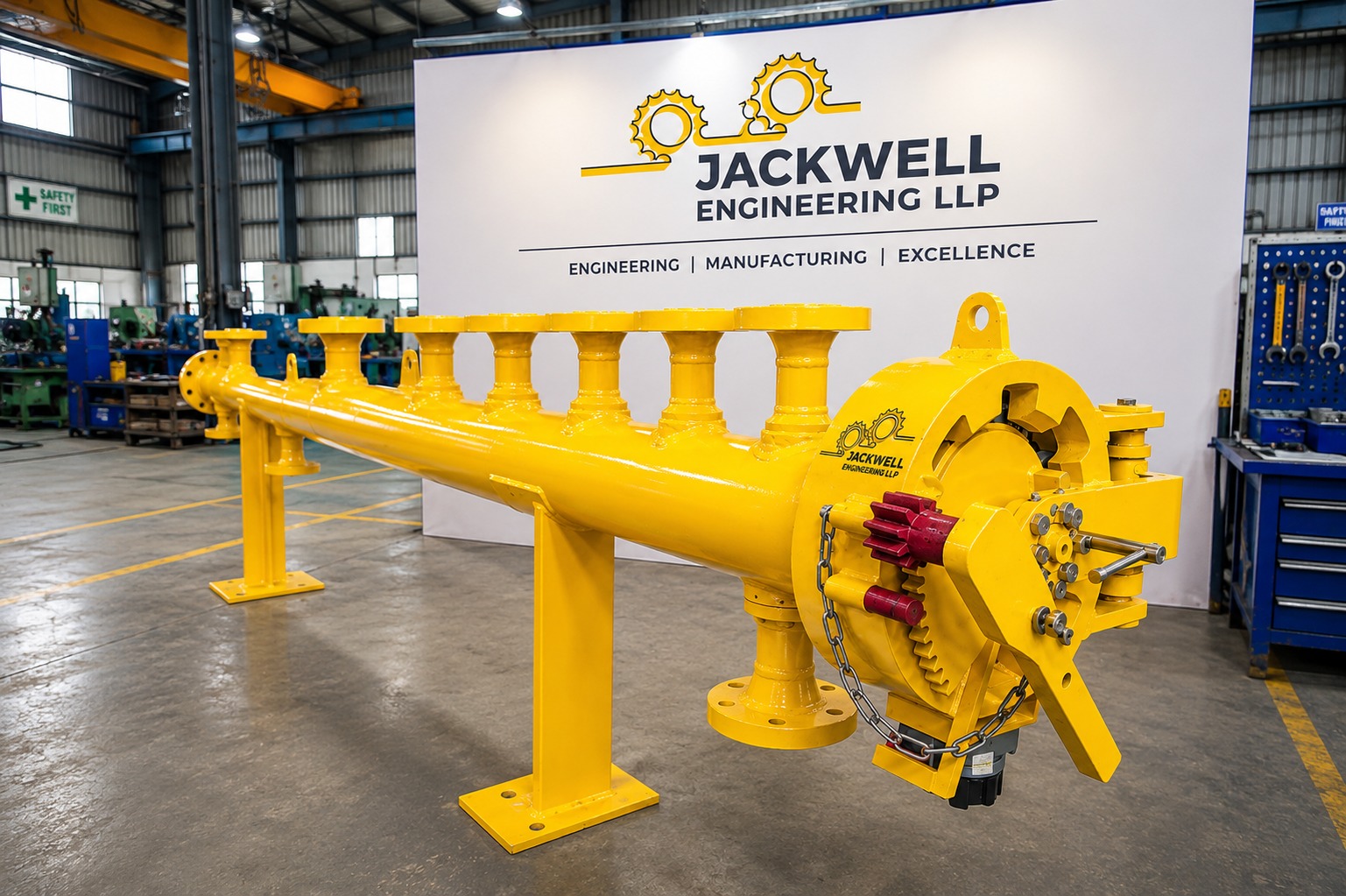
Pig Launcher And Pig Receiver Systems
Jackwell Engineering LLP Designs And Manufactures Pig Launchers And Pig Receivers For Pipeline Pigging Operations In The Oil & Gas, Petrochemical, Refinery, Chemical, Water, And Process Industries.
Our Pig Launcher And Receiver Systems Are Engineered To Enable The Safe And Efficient insertion, Launching, Receiving, And Removal Of Pipeline Pigs Used For Pipeline Cleaning, Liquid Removal, Product Separation, Batching, Inspection, And Maintenance.
We Offer custom-designed Pig Launcher And Receiver Packages Based On Pipeline Size, Operating Pressure, Temperature, Fluid Characteristics, Pig Type, Project Specifications, And Applicable International Codes And Standards.
What Is A Pig Launcher?
A Pig Launcher, Also Known As A Pig Trap Launcher, Is A Pressure-containing Pipeline Vessel Used To Introduce A Pig Into A Pipeline System.
The Launcher Is Normally Installed At The upstream End Of The Pipeline. The Pig Is Loaded Into The Barrel, The Closure Is Securely Locked, And The Launcher Is Pressurized Before The Pig Is Propelled Into The Pipeline Using The Process Fluid Or Gas Flow.
How A Pig Launcher Works
The Typical Operating Sequence Is:
- Open & Prepare
The Launcher Is Isolated And Depressurized Before Opening The Quick-opening Closure. - Load The Pig
The Pipeline Pig Is Inserted Into The Launcher Barrel And Positioned Correctly. - Close The Launcher
The Quick-opening Closure Is Securely Closed And Locked. - Pressure Equalization
The Launcher Is Gradually Pressurized To Equalize Pressure With The Pipeline. - Launch The Pig
The Mainline Valve Is Opened And The Kicker Line Is Operated To Establish Flow Behind The Pig. - Pig Travels Through Pipeline
The Pressure Differential And Pipeline Flow Push The Pig Through The Pipeline. - Pig Detection
Pig Signallers Or Indicators Can Be Used To Confirm Pig Passage.
What Is A Pig Receiver?
A Pig Receiver, Also Known As A Pig Trap Receiver, Is A Pressure-containing Vessel Installed At The downstream End Of A Pipeline To Safely Receive A Pig After It Has Completed Its Journey Through The Pipeline.
The Receiver Is Designed To Decelerate And Capture The Pig While Maintaining Safe Containment Of The Pipeline Fluid.
How A Pig Receiver Works
The Typical Operating Sequence Is:
- Prepare The Receiver
The Receiver Is Placed In The Correct Operating Configuration Before The Pig Arrives. - Pig Arrival
The Pig Travels Through The Pipeline And Enters The Receiver. - Pig Detection
A Pig Signaller Confirms The Arrival Of The Pig. - Isolate The Receiver
The Receiver Is Isolated From The Main Pipeline. - Depressurize & Drain
The Receiver Is Safely Depressurized And Drained Or Vented As Required. - Open The Closure
After Confirming Zero Pressure, The Quick-opening Closure Is Opened. - Remove The Pig
The Pig Is Safely Removed From The Receiver Barrel.
Pig Launcher / Receiver Design
Jackwell Engineering LLP Designs Pig Launcher And Receiver Systems According To The Specific Requirements Of Each Pipeline Application.
The Design Process Considers:
- Pipeline Nominal Diameter
- Pipeline Wall Thickness
- Design Pressure
- Operating Pressure
- Design Temperature
- Operating Temperature
- Pipeline Fluid
- Corrosive Service Requirements
- Pig Type And Dimensions
- Pig Length
- Pipeline Configuration
- Pigging Frequency
- Design Code And Project Specifications
- Material Requirements
- Corrosion Allowance
- Connection And Nozzle Requirements
- Quick-opening Closure Requirements
- Pig Signaller Requirements
- Drain And Vent Connections
- Instrumentation Requirements
Typical Pig Launcher / Receiver Configuration
A Typical System Consists Of:
1. Main Barrel
The Main Barrel Provides The Internal Space Required For Pig Loading, Launching, Or Receiving.
2. Reducer / Cone
A Reducer Or Eccentric Cone Connects The Larger Trap Barrel To The Pipeline Diameter.
3. Quick Opening Closure
The Closure Provides Rapid And Safe Access For Loading Or Removing The Pig.
4. Kicker Line
The Kicker Line Is Used To Control Flow And Create The Pressure Differential Required To Launch Or Receive The Pig.
5. Mainline Connection
The Mainline Connection Allows The Pig Trap To Integrate With The Pipeline System.
6. Vent Connection
Used For Controlled Venting And Depressurization.
7. Drain Connection
Used For Draining Liquids From The Pig Trap.
8. Pressure Gauge / Instrumentation
Provides Pressure Monitoring During Operation.
9. Pig Signaller
Indicates The Passage Or Arrival Of The Pig.
10. Quick Opening Closure Safety System
Provides Operational Safety By Preventing The Closure From Being Opened While The Vessel Remains Pressurized.
Design Codes & Standards
Depending On Project Requirements, Jackwell Engineering LLP Can Design And Manufacture Pig Launcher And Receiver Systems In Accordance With Applicable International Codes, Standards, And Client Specifications, Such As:
- ASME Section VIII, Division 1
- ASME B31.4
- ASME B31.8
- API 6H – Pipeline And Piping Equipment Closures
- ASME B16.5
- ASME B16.9
- ASME B16.47
- EN 10204
- NACE Requirements, Where Applicable
- Client-specific Engineering Specifications
The Applicable Design Code Is Selected Based On The Service, Pressure, Temperature, Location, And Project Requirements.
Materials
Pig Launcher And Receiver Components Can Be Manufactured Using Suitable Materials Based On Service Conditions, Including:
- Carbon Steel
- Low Temperature Carbon Steel
- Stainless Steel
- Duplex Stainless Steel
- Other Special Materials As Per Project Requirements
Material Selection Can Consider:
- Design Temperature
- Fluid Composition
- Corrosion Resistance
- H?S Service
- Sour Service Requirements
- NACE Compliance
- Corrosion Allowance
Safety Features
Safety Is A Critical Consideration In Pig Launcher And Receiver Design.
Our Systems Can Incorporate:
- Quick-opening Closure With Safety Interlock
- Pressure Warning System
- Vent And Drain Connections
- Pressure Gauge
- Pig Signaller
- Pressure Relief Provisions, Where Required
- Locking And Mechanical Safety Arrangements
- Safe Access Platforms And Ladders
- Earthing Connections
- Lifting Arrangements
- Customized Safety Features As Per Client Requirements
Applications
Pig Launcher And Receiver Systems Are Widely Used In:
- Oil & Gas Pipelines
- Crude Oil Pipelines
- Natural Gas Pipelines
- Product Pipelines
- Water Pipelines
- Petrochemical Plants
- Refineries
- Chemical Industries
- Cross-Country Pipelines
- Offshore And Onshore Pipeline Systems
They Support Various Pigging Applications, Including:
Pipeline Cleaning | Liquid Removal | Product Separation | Batching | De-watering | Gauging | Inspection | Maintenance
Why Choose Jackwell Engineering LLP?
Engineering Expertise
Customized Design Based On Project-specific Requirements.
Quality Manufacturing
Controlled Manufacturing And Inspection Processes.
Customized Solutions
Designed For Different Pipeline Sizes, Pressures, Temperatures, And Services.
Complete Support
Technical Support From Engineering And Design Through Manufacturing, Testing, And Delivery.
Project-Focused Approach
Solutions Aligned With Customer Specifications, Applicable Codes, And Project Requirements.